
Unlock Your Potential: Simple Pilates Machine Routines for Beginners
Release Time:
Sep 25,2025
Unlock Your Potential: Simple Pilates Machine Routines for Beginners Table of Contents 1. Understanding Pilates and Its Benefits 2. Essential Pilates Machines for Beginners 3. Basic Pilates Machine Routines for Beginners 3.1 Introductory Routine: The Hundred 3.2 Strengthening Routine: Footwork 3.3 Flexibility Routine: The Roll-Up 3.4 Core Activation: The Plank 4. Tips for Effecti
Unlock Your Potential: Simple Pilates Machine Routines for Beginners
Table of Contents
1. Understanding Pilates and Its Benefits
2. Essential Pilates Machines for Beginners
3. Basic Pilates Machine Routines for Beginners
3.1 Introductory Routine: The Hundred
3.2 Strengthening Routine: Footwork
3.3 Flexibility Routine: The Roll-Up
3.4 Core Activation: The Plank
4. Tips for Effective Pilates Practice
5. Common Mistakes to Avoid in Pilates
6. Frequently Asked Questions
7. Conclusion
1. Understanding Pilates and Its Benefits
Pilates is a low-impact exercise method that focuses on strengthening muscles while improving postural alignment and flexibility. Developed by Joseph Pilates in the early 20th century, this practice emphasizes the mind-body connection. By engaging the core and enhancing control over movement, Pilates promotes better body mechanics.
The benefits of Pilates are numerous. It helps build core strength, increases flexibility, enhances body awareness, and improves posture. Furthermore, it can aid in injury rehabilitation and prevention. Regardless of fitness level, anyone can benefit from incorporating Pilates into their routine.
2. Essential Pilates Machines for Beginners
For beginners, a few key Pilates machines are crucial to enhance the practice effectively:
- **Reformer**: This versatile machine allows for a wide range of exercises targeting various muscle groups. Its adjustable springs provide resistance that can be tailored to individual needs.
- **Cadillac**: Also known as the trapeze table, this machine features a frame with a variety of attachments that offer countless exercises focusing on strength, flexibility, and coordination.
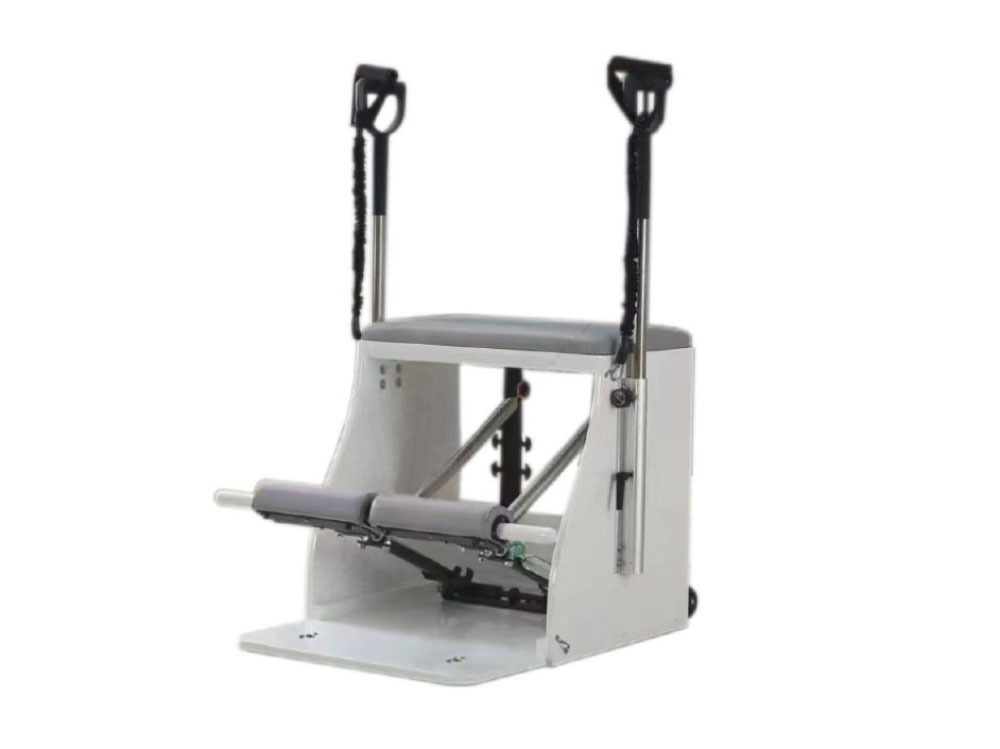
- **Wunda Chair**: This compact piece of equipment provides a unique way to build strength and stability, often used for targeting the core and lower body.
Investing in one or more of these machines can significantly improve your Pilates experience, ensuring you get the most out of each session.
3. Basic Pilates Machine Routines for Beginners
Creating a consistent routine is essential for progress. Here, we outline simple yet effective Pilates machine routines for beginners.
3.1 Introductory Routine: The Hundred
**The Hundred** is a classic Pilates exercise that serves as an excellent warm-up. It enhances circulation and warms up the core.
**How to perform The Hundred**:
1. Lie on your back on the reformer with your legs in a tabletop position.
2. Engage your core and lift your head, neck, and shoulders off the carriage.
3. Extend your arms by your sides, parallel to the ground.
4. Begin pumping your arms up and down while inhaling for five counts and exhaling for five counts. Aim for a total of 100 pumps.
This exercise not only warms up the body but also improves endurance and breathing control.
3.2 Strengthening Routine: Footwork
The **Footwork** exercise is fundamental for strengthening the lower body while building core stability.
**How to perform Footwork**:
1. Sit on the reformer and place your feet on the footbar, hip-width apart.
2. Engage your core and press through your heels to extend your legs fully.
3. Slowly bend your knees to return to the starting position.
4. Repeat for 8-10 repetitions, focusing on controlled movements.
This routine strengthens the legs and promotes proper alignment.
3.3 Flexibility Routine: The Roll-Up
**The Roll-Up** is excellent for improving flexibility in the spine and hamstrings while engaging the core.
**How to perform The Roll-Up**:
1. Lie on your back on the reformer with your legs extended and feet flexed against the footbar.
2. Hold the straps in your hands, palms facing down.
3. Engage your core and pull yourself up, rounding your spine as you reach for your toes.
4. Slowly roll back down with control and repeat 5-8 times.
This exercise enhances spinal flexibility and strengthens the abdominal muscles.
3.4 Core Activation: The Plank
The **Plank** on the reformer is an exceptional exercise for activating the entire core.
**How to perform The Plank**:
1. Start in a high plank position with your hands on the footbar and your feet on the carriage.
2. Engage your core, keeping your body straight from head to heels.
3. Hold this position for 20-30 seconds, focusing on maintaining alignment.
This routine builds overall core strength and stability.
4. Tips for Effective Pilates Practice
To maximize your Pilates experience, consider these tips:
- **Focus on Your Breath**: Proper breathing technique enhances movement control and increases oxygen flow.
- **Engage Your Core**: Always maintain core engagement throughout each exercise to protect your spine and improve effectiveness.
- **Listen to Your Body**: Pay attention to your body’s signals. Modify or skip exercises if you experience discomfort.
- **Practice Consistently**: Establish a regular schedule to reinforce learning and progress in your practice.
5. Common Mistakes to Avoid in Pilates
While practicing Pilates, beginners often make certain mistakes that can hinder their progress. Here are some common pitfalls to avoid:
- **Holding Your Breath**: Proper breathing is crucial. Avoid breath-holding, which can lead to tension.
- **Poor Alignment**: Focus on maintaining correct body alignment to prevent strain and injury.
- **Rushing Through Movements**: Pilates emphasizes slow, controlled movements. Avoid the temptation to rush through repetitions.
- **Neglecting the Core**: Failing to engage the core can reduce the effectiveness of the exercises and increase the risk of injury.
By being aware of these mistakes, you can enhance your practice and achieve better results.
6. Frequently Asked Questions
**Q1: How often should I practice Pilates?**
A: For beginners, practicing 2-3 times a week is ideal to build strength and flexibility. Adjust based on your comfort level and progress.
**Q2: Do I need a Pilates machine to start?**
A: While machines enhance the experience, you can begin with mat Pilates exercises. Eventually, incorporating machines can provide additional benefits.
**Q3: Is Pilates suitable for everyone?**
A: Pilates is low-impact and adaptable for different fitness levels. However, consult with a healthcare professional if you have specific health concerns.
**Q4: How long before I see results from Pilates?**
A: Many practitioners notice improvements in strength and flexibility within a few weeks of consistent practice.
**Q5: Can Pilates help with weight loss?**
A: While Pilates itself is not a weight-loss program, it can complement a healthy lifestyle and contribute to muscle toning and overall fitness.
7. Conclusion
Embarking on your Pilates journey can be a rewarding experience that unlocks your potential for strength, flexibility, and overall well-being. By incorporating simple Pilates machine routines into your fitness regimen, you can enhance your physical health while cultivating mindfulness and body awareness. Remember to practice consistently, focus on your form, and enjoy the journey of self-improvement. With dedication and the right approach, you’ll harness the full benefits of Pilates and elevate your fitness to new heights.
You Can Also Learn More About Industry Trends

with 16 years of design experience and professional team, can meet the different needs of different customers, design and manufacture better sports aid equipment. Products are exported to France, Canada, South Korea, Australia and so on.


Contact Information
Tel: +86-13103377000 / +86-13131181213
E-mail: furuili003@frlpilates.com
WhatsApp: +86-15831880002
Add: No. 25 Xiangyang Road, Xiaochai Development Zone, Longhuadian Township, Hejian City, Hebei Province
Consult
If you are interested in our products, please leave your email, we will contact you as soon as possible, thank you!